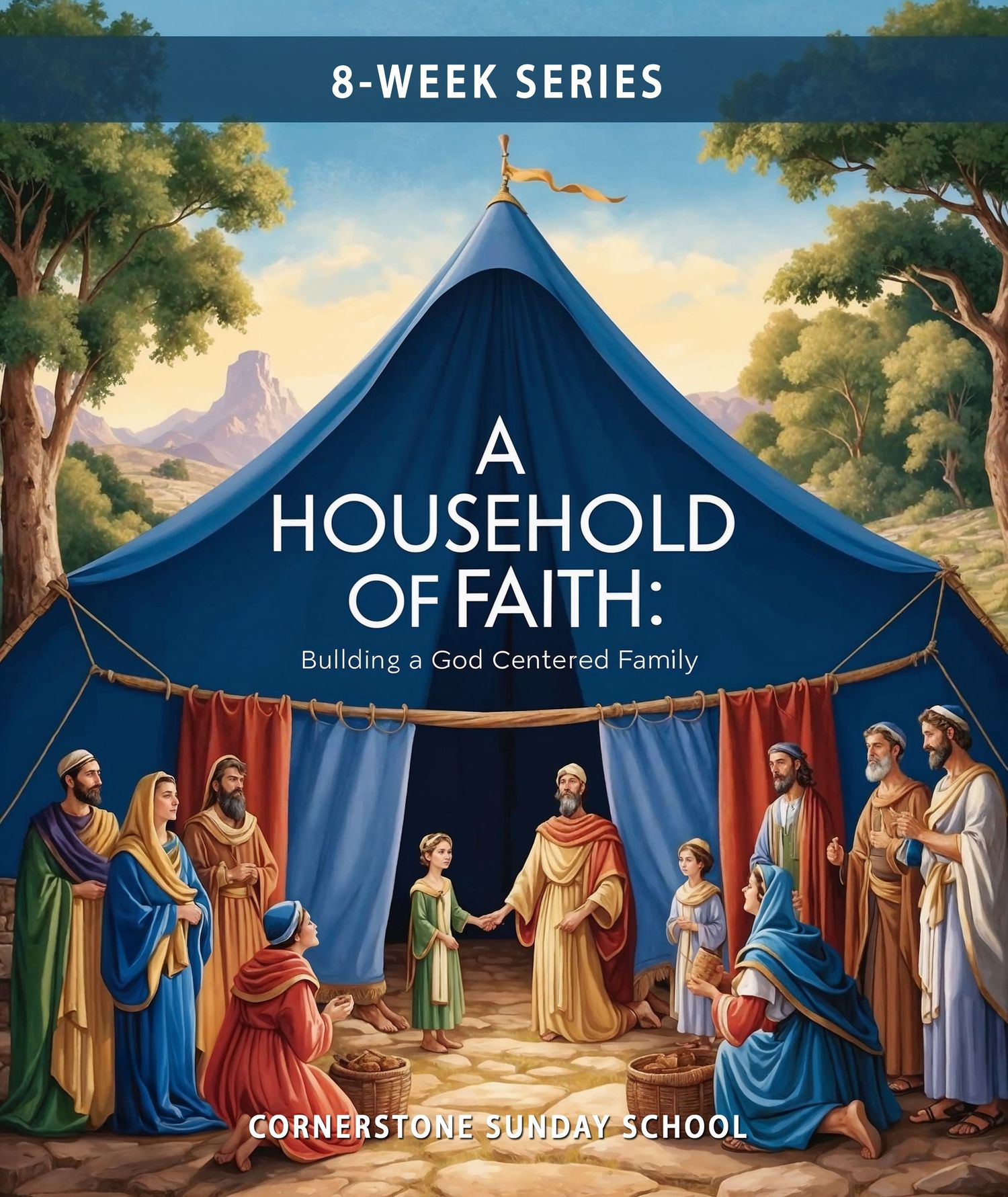
A Household of Faith – Building a God-Centered Family is an 8-week teaching series that explores how the structure and symbolism of the Old Testament Tabernacle provide a blueprint for building spiritually healthy homes today. Each week draws from key elements of the Tabernacle—such as the altar, the lampstand, the table of showbread, and the mercy seat—to illustrate timeless biblical principles for marriage, parenting, prayer, discipleship, and family unity. This practical and Scripture-rich series equips couples to cultivate Christ-centered homes marked by sacrifice, purity, grace, and truth, with the goal of raising the next generation to know and follow Jesus.
Teacher: Bryan Carter
“And these words that I command you today shall be on your heart. You shall teach them diligently to your children, and shall talk of them when you sit in your house, and when you walk by the way, and when you lie down, and when you rise.”
Deuteronomy 6:6–7 (ESV)
Downloadable Resources
Teachers Guide
DOWNLOAD
Class Handout
DOWNLOAD
JPG
Artwork
DOWNLOAD
ZIP
All Materials
DOWNLOAD
8-Week Study
Key Scripture: 1 Corinthians 5:7; Romans 12:1
The altar in the Tabernacle was a place of sacrifice, symbolizing atonement and devotion to God. In the same way, a godly home requires self-sacrifice—putting others’ needs above our own, making spiritual disciplines a priority, and surrendering personal desires for the sake of our family. This week, we’ll explore what it means to "cleanse out the old leaven" (1 Corinthians 5:7) in our homes, removing unhealthy habits and making room for Christ. Parents are called to model sacrificial love (Ephesians 5:2), and spouses are challenged to serve one another in humility (Philippians 2:3-4). What daily sacrifices can we make to ensure our homes reflect the presence of Christ?
WEEK 1
An Altar in Your Home: The Role of Sacrifice in Family Life
WEEK 2
Cleansing the Temple: Purity in Our Hearts and Homes
Key Scripture: 2 Corinthians 7:1; Joshua 24:15
Just as the priests washed in the bronze laver before entering the Tabernacle, our homes should be places of spiritual cleansing and purity. This week, we’ll discuss how to remove worldly influences that compromise our faith and how to cultivate holiness in our family culture. Parents have the responsibility to set the spiritual tone for their households (Deuteronomy 6:6-7), ensuring that what we watch, listen to, and participate in aligns with God's will. We’ll explore how repentance, forgiveness, and accountability keep our families spiritually clean and set apart for God. What are the "unclean things" (2 Corinthians 6:17) that need to be removed from our homes?
WEEK 3
Feeding Your Family Spiritually: Making Scripture Central
Key Scripture: Deuteronomy 8:3; Matthew 4:4
The table of showbread in the Tabernacle represented God's provision and the necessity of spiritual nourishment. Just as physical food sustains us, God's Word is essential for our family's spiritual health. This week, we’ll explore how to make Scripture a central part of daily life—through family devotions, meaningful conversations, and personal study. Jesus declared that "man shall not live by bread alone, but by every word that comes from the mouth of God" (Matthew 4:4), emphasizing our deep need for His truth. We’ll discuss practical ways to ensure that our children develop a hunger for God’s Word and that our marriages are rooted in biblical wisdom.
WEEK 4
Lighting the Path for the Next Generation: Teaching Children God’s Ways
Key Scripture: Psalm 119:105; Proverbs 22:6
The golden lampstand in the Tabernacle provided light, illuminating the way for the priests. Likewise, parents are called to be a light for their children, guiding them through life with wisdom and biblical truth. This week, we’ll examine how to intentionally disciple our children, teaching them to love and follow Jesus. Proverbs 22:6 reminds us to "train up a child in the way he should go," but this training requires consistency, prayer, and a commitment to modeling Christ-like behavior. We’ll discuss how parents can create an environment where faith is taught, caught, and lived out in everyday life.
WEEK 5
The Fragrance of Your Home: Cultivating a Culture of Prayer and Worship
Key Scripture: Psalm 141:2; Philippians 4:6-7
The altar of incense in the Tabernacle symbolized the prayers of God’s people rising before Him. Just as incense filled the Holy Place, our homes should be filled with prayer, gratitude, and worship. This week, we’ll talk about establishing a family prayer life, the importance of praying for and with our children, and how worship can transform the atmosphere of our home. When we replace anxiety with prayer, God's peace guards our hearts (Philippians 4:6-7). We’ll explore how consistent prayer builds trust in God and strengthens family relationships. What steps can we take to make prayer a natural part of our household?
WEEK 6
Destroying Dividing Walls: Grace and Reconciliation in Family Conflicts
Key Scripture: Ephesians 2:14-17; Colossians 3:13
The Tabernacle’s veil separated people from God's presence, but Jesus "tore down the dividing wall of hostility" (Ephesians 2:14) through His sacrifice. In our homes, conflicts and misunderstandings can create barriers between family members. This week, we’ll discuss how to handle disagreements with grace, prioritize forgiveness, and create a culture of reconciliation. Scripture calls us to bear with one another and forgive as Christ forgave us (Colossians 3:13). Through biblical principles, we’ll explore practical ways to resolve conflicts, restore relationships, and teach our children how to handle conflict in a godly way.
WEEK 7
Leading Your Family into God’s Presence: Parenting and Discipleship
Key Scripture: Hebrews 10:19-22; Deuteronomy 6:6-9
The high priest had the privilege of entering the Holy of Holies, but through Christ, all believers have direct access to God. As parents, we are called to lead our families into God’s presence, teaching them to love and seek Him. This week, we’ll discuss what it means to be spiritual leaders in our homes, emphasizing the importance of consistent discipleship. Deuteronomy 6:6-9 instructs us to impress God's commands on our children—talking about them at home, on the road, and before bed. What practical habits can we build to ensure our children develop a personal relationship with God?
WEEK 8
Teaching the Next Generation About Grace: Christ as Our Atonement
Key Scripture: 1 John 2:2; Romans 5:8
The mercy seat in the Tabernacle was the place of atonement, pointing to Jesus' ultimate sacrifice for our sins. Our children need to understand the depth of God's grace and what Christ has done for them. This week, we’ll focus on how to explain the Gospel in a way that is meaningful for children and teenagers. Many parents struggle with balancing grace and discipline—how do we model God's mercy while also setting biblical standards? Romans 5:8 reminds us that "while we were still sinners, Christ died for us." We’ll explore ways to share the Gospel clearly, emphasizing how grace transforms both parents and children.